
The Valley of the Kings is one of the most important archaeological sites in Luxor, Egypt. Located on the West Bank of the Nile River, this royal burial ground contains underground tombs built for pharaohs and other members of the royal elite during the New Kingdom. More than 60 tombs have been found here, but only a selection is open to the public at any one time. Inside, visitors can discover painted ceilings, hieroglyphics, and scenes that reveal how ancient Egyptians understood death and the afterlife.
If you plan to visit the Valley of the Kings in Luxor, it helps to decide which tombs you would most like to see before arriving. The standard entry ticket covers a selection of open tombs, while some famous tombs require separate tickets. This guide explains the site’s history, highlights tombs worth considering, and covers the practical details and nearby attractions to help you plan your visit.
Why Was the Valley of the Kings Built in Luxor?
The Pharaohs Buried in the Valley
During the New Kingdom, many Egyptian pharaohs chose this secluded desert valley as their burial place. Located near ancient Thebes, the area became an important royal burial ground. The tombs were designed to protect the king’s burial and provide the religious texts and imagery believed to support his journey into the afterlife.
Why the Tombs Were Hidden Underground
Unlike the large pyramids built in earlier periods, the royal tombs here were cut into the limestone hills, with entrances that were often designed to be discreet. However, this did not always protect them from ancient tomb robbers. Tutankhamun’s tomb is especially famous because it was discovered in 1922 with much of its burial collection still inside, making it one of the most significant archaeological discoveries in Egypt with Lura Egypt Tours.
What the Tomb Decorations Reveal About the Afterlife
The walls contain religious texts, symbols and painted scenes linked to the pharaoh’s journey after death. These images were not simply decoration. They expressed beliefs about the gods, the sun’s nightly journey and the hope of rebirth.
What Makes the Tombs of the Valley of the Kings Special?
Ancient Paintings and Hieroglyphics
Many tombs contain colourful paintings and carefully carved hieroglyphics. Depending on which chambers are open, you may see scenes of gods, sacred symbols, and passages from ancient religious texts.
The Meaning Behind the Tomb Walls
The artwork helps visitors understand how royal burials connected power, religion and the afterlife. A knowledgeable guide can explain the meaning of symbols and figures that might otherwise be difficult to recognise.
How the Tombs Differ in Size, Layout and Decoration
Not every tomb offers the same experience. Some have long corridors and multiple chambers, while others are known for their detailed ceiling paintings or distinctive colours. Visiting a few different tombs can show how royal burial design and decoration varied.
Which Tombs Should You Visit First?
The Tomb of Ramesses VI and Its Painted Ceiling
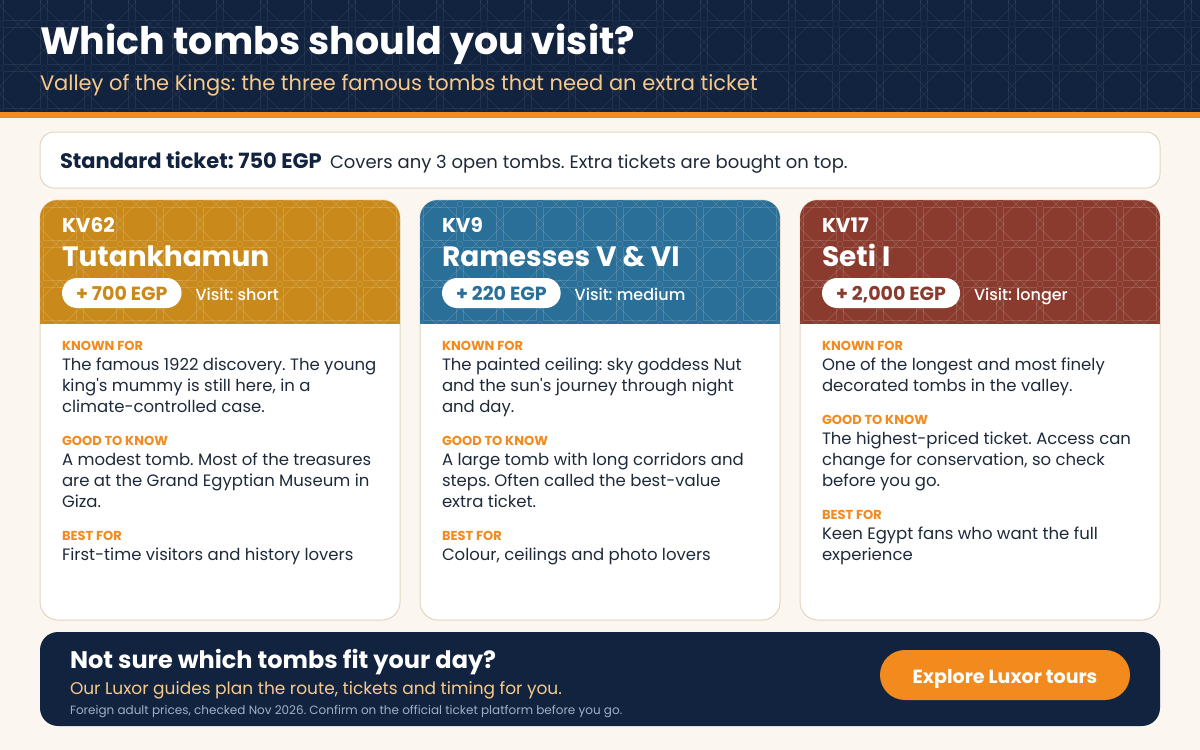
The tomb of Ramesses VI (KV9) is a popular choice for visitors interested in richly decorated royal chambers. Its burial chamber ceiling shows the sky goddess Nut stretched across the night sky, illustrating the sun’s journey through the Book of the Day and the Book of the Night. It requires its own ticket on top of the standard entry.
The Tomb of Tutankhamun and Its Historical Importance
The tomb of Tutankhamun (KV62) is famous for its discovery and the extraordinary collection of objects associated with the young king. The tomb itself is more modest in scale than some other royal tombs, but its historical importance makes it a special stop.
One of the main reasons to enter is to see Tutankhamun’s mummy, which remains in the tomb in a climate-controlled case. Many of the objects discovered with the king are displayed at the Grand Egyptian Museum in Giza, so visitors should not expect to see his full collection inside the tomb. Entry requires a separate ticket and visitors should check the latest ticket arrangements before their visit.
Exploring Other Open Royal Tombs
The tomb of Seti I (KV17) is one of the longest and most finely decorated in the valley, and it also needs a separate, higher-priced ticket. The selection of tombs open to the public rotates to protect the paintings. Before your visit, check the official ticket platform for current access. Prioritise tombs based on your interests rather than trying to enter every available chamber.
How Do You Plan Your Visit to the Valley of the Kings?
Getting to the Entrance on Luxor’s West Bank
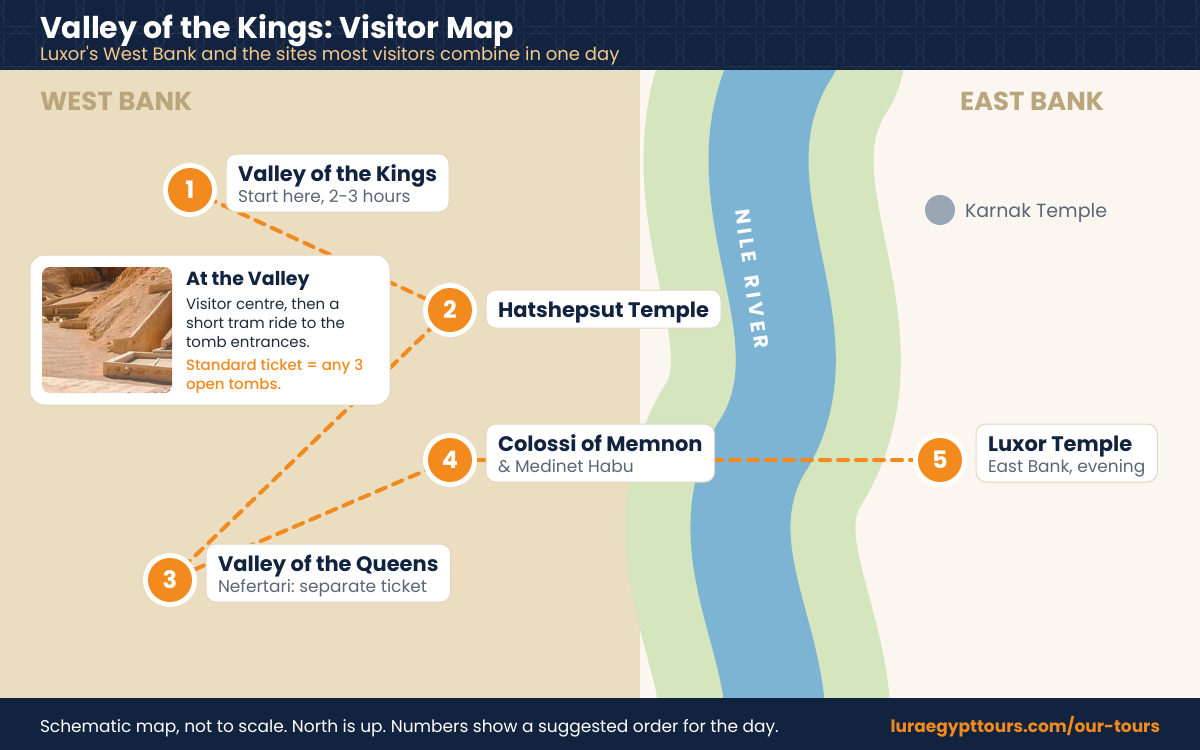
The site lies west of the Nile, away from Luxor’s main East Bank attractions. You can arrange transport with a local driver, a guided tour, or a private itinerary Valley of the Kings. From the visitor centre, a short electric tram ride takes you to the entrance to the valley.
Understanding Tickets and Additional Tomb Fees
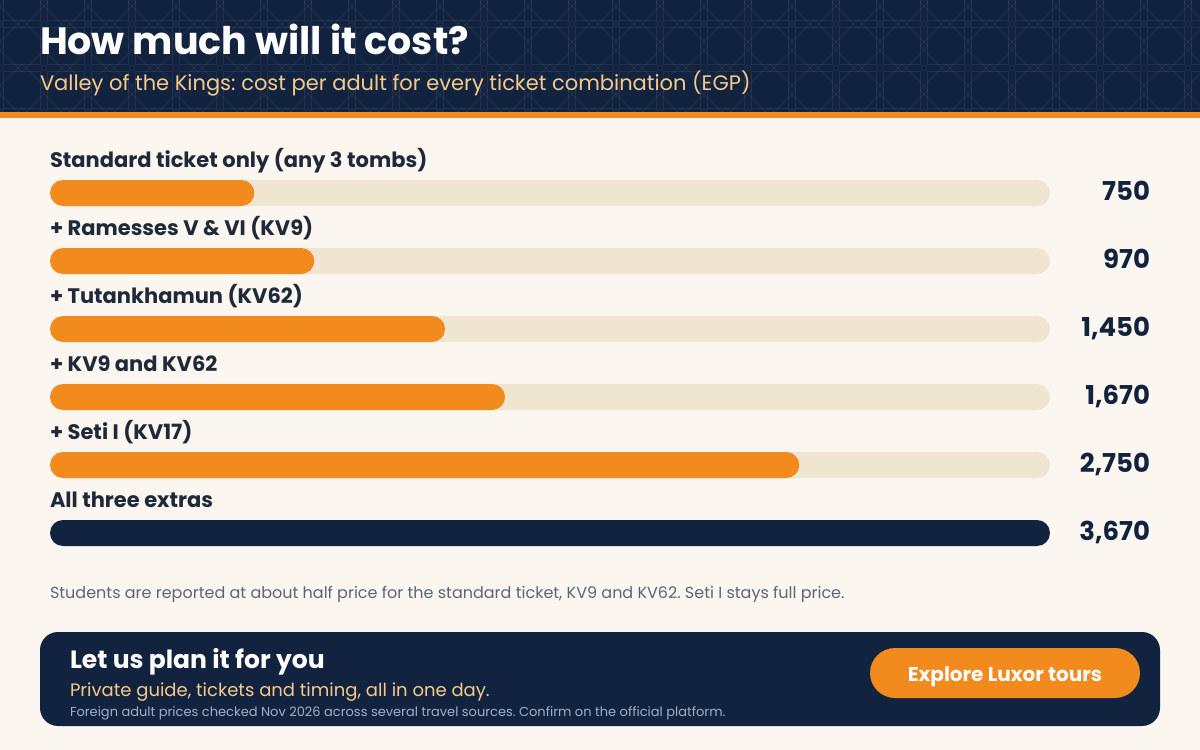
At the time of writing, the standard ticket for foreign adults costs 750 EGP and lets you enter any three of the standard tombs that are open that day. Tutankhamun’s tomb costs 700 EGP extra, and Seti I costs 2,000 EGP extra. Ramesses VI also needs its own ticket.
The ticket office no longer accepts cash, so pay by Visa or Mastercard, or buy e-tickets in advance. You can consult the official Valley of the Kings ticket page to review the latest prices. Keep your ticket during the visit, as staff check it at each tomb.
How Much Time to Allow for the Visit
Allow two to three hours for three standard tombs plus one or two special tickets. Your total time depends on queues, walking pace, and whether you have a guide.
Why an Early Start Can Help
Visiting early in the morning can make your experience more comfortable, especially during the hotter months. An early start may also help you explore some tombs before the busiest periods. Opening hours and last-entry times can vary, so check the official listing before setting off.
What Should You Know Before Entering the Royal Tombs?
Walking, Steps and Underground Conditions
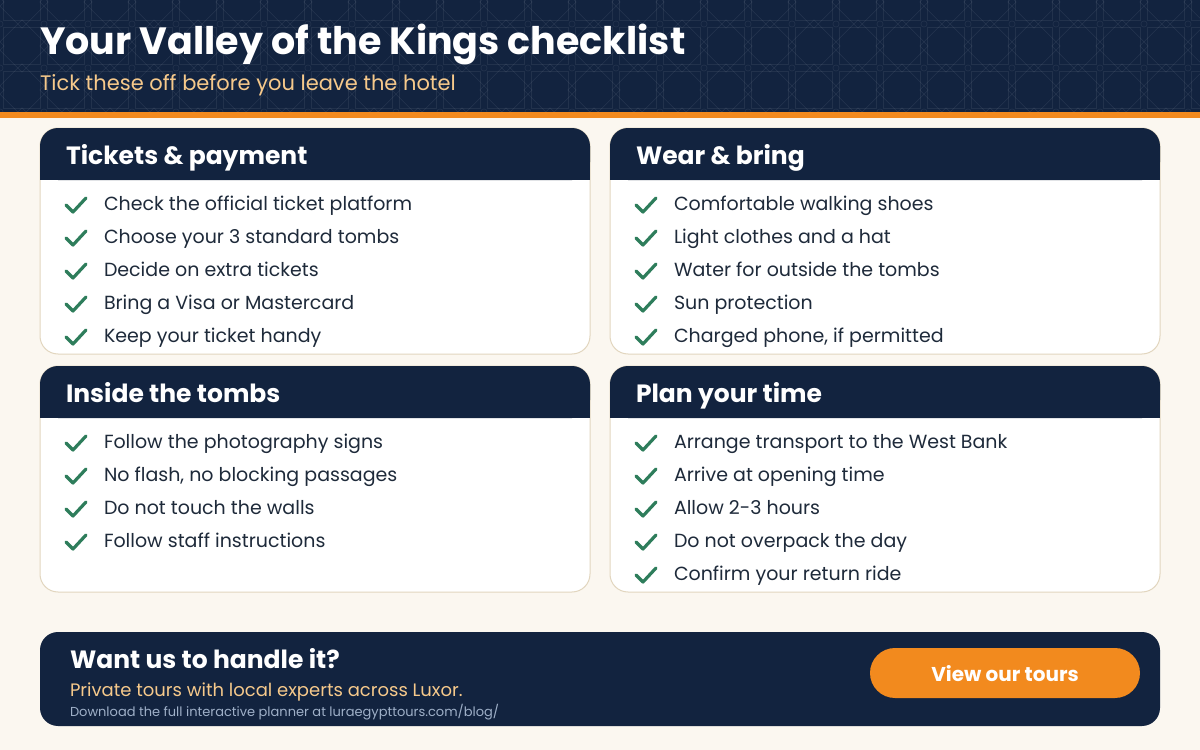
Expect uneven ground, steps, sloping passages, and enclosed underground spaces. Some tombs are warm and humid inside. Move carefully and follow staff instructions.
Photography Rules and Protecting the Paintings
Photography rules can vary by site and may change. Check the latest guidance on the official ticket platform and follow the instructions displayed at each tomb. Avoid touching the walls or blocking narrow passages while taking photographs, and follow any restrictions on flash or camera equipment.
What to Wear and Bring
Wear comfortable walking shoes and light clothing suitable for the weather. Bring drinking water for use outside the tombs, sun protection, a hat, and your ticket confirmation. There is very little shade between tombs.
Accessibility Considerations
Some tombs have narrow passages, steps, and limited space, which may make them difficult for visitors with mobility needs. Contact the site or your tour provider before visiting to discuss access and possible alternatives.
Can You Visit the Valley of the Kings and Other Luxor Sites in One Day?
Combining the Valley With the Temple of Hatshepsut
The nearby Temple of Hatshepsut makes a logical addition to a West Bank itinerary. Visiting both sites in one day can provide a broader view of royal history and monumental architecture, provided you leave enough time for transport and exploration.
Adding the Valley of the Queens
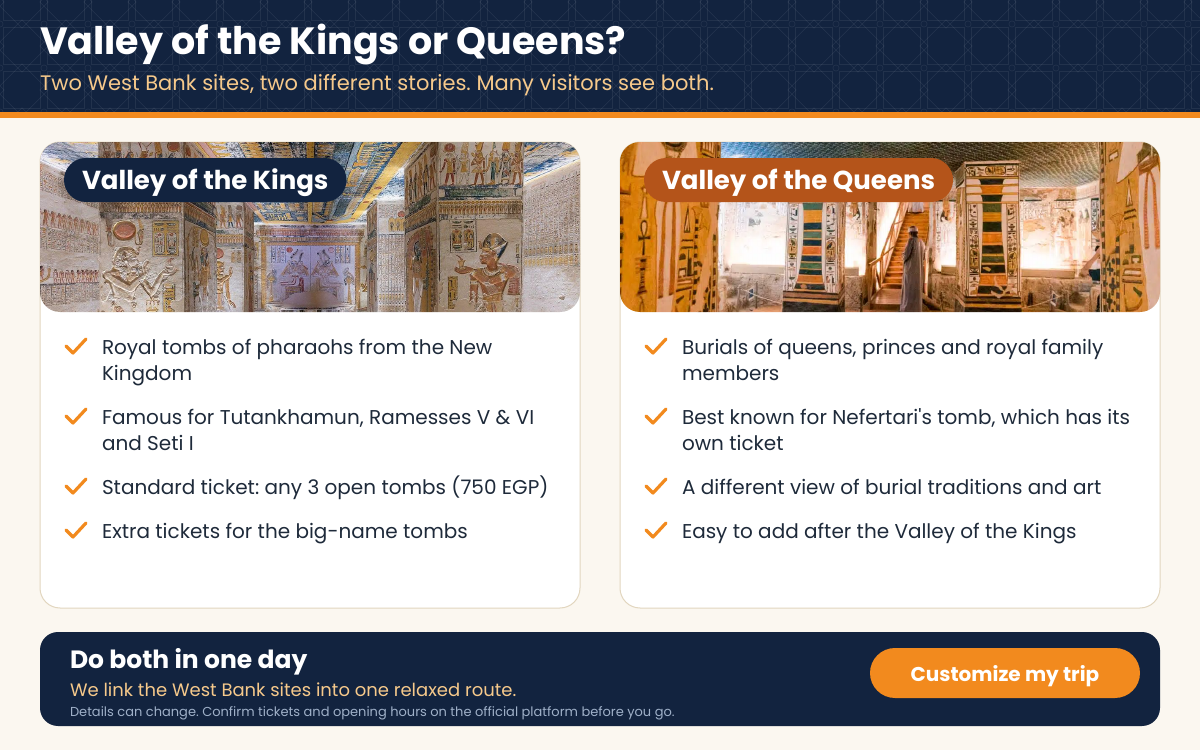
The Valley of the Queens is a separate archaeological site with royal and elite burials. Its tombs offer a different perspective on burial traditions and ancient Egyptian art. Its best-known tomb, Nefertari’s, has its own ticket.
Visiting Other West Bank Monuments
Many visitors start the day with a sunrise hot air balloon ride over Luxor, which gives you an aerial view of the West Bank before you explore it on foot. The Colossi of Memnon and Medinet Habu are also close by. Choose a manageable group of attractions rather than rushing through every site in one day.
When to Visit Luxor Temple on the East Bank
Luxor Temple is on the East Bank, across the Nile from the Valley of the Kings. You can combine it with a West Bank visit if transport and timing allow. Many visitors see it in the evening, when it is cooler and the temple is lit up.
How Can You Get More From Your Visit?
Learning About the Tombs Before You Enter
Reading a little about the pharaohs and their burial customs can help you recognise important details inside the tombs. If you are also visiting Cairo, the Grand Egyptian Museum’s Tutankhamun galleries add valuable context to what you see in KV62.
Choosing a Knowledgeable Local Guide
A knowledgeable local guide can explain the artwork, historical background, and differences between the tombs. Note that guides usually explain the tombs outside, as talking inside is often restricted. Ask what is included before you book.
Taking Time to Compare Different Tombs
Rather than judging the site by the number of tombs you enter, consider what makes each one distinctive. You may prefer a beautifully painted ceiling, a particular pharaoh’s history, or the layout of a burial chamber.
Planning a Visit Around Your Main Interests
History lovers, photographers, and first-time visitors may prioritise different tombs. A well-organised itinerary should match your interests and allow time to explore at a comfortable pace.
Lura Egypt Tours can help you organise your Luxor sightseeing around the Valley of the Kings and other local highlights. Explore our Luxor tours to plan a visit that fits your schedule.
Conclusion: Making the Most of the Valley of the Kings
The Valley of the Kings offers a remarkable look at royal burial traditions, ancient Egyptian beliefs, and the artistic skill of the New Kingdom. The tomb of Tutankhamun, the decorated chambers of Ramesses VI, and other accessible tombs each provide a different reason to visit.
Before you go, decide which special tickets you want, bring a card for payment and check opening hours. Start early if your schedule allows, wear comfortable shoes, and leave enough time to explore without rushing. You can also combine the West Bank with Luxor Temple on the East Bank if your itinerary permits.
Ready to discover Luxor’s ancient history? Explore Luxor with Lura Egypt Tours and plan your visit around the monuments and tombs that interest you most.
FAQs
Luxor’s Valley of the Kings is on the West Bank, near the ancient city of Thebes. It lies across the Nile River from many of Luxor’s East Bank attractions, including Luxor Temple.
The number of tombs included in the standard ticket depends on the current ticket arrangements and the tombs open on the day of your visit. Some famous tombs, such as Tutankhamun, Seti I and Ramesses VI, may require separate tickets. Check the official ticket platform before your visit to confirm how many tombs you can enter.
Yes, especially if you are interested in Tutankhamun’s history and want to see his mummy, which remains inside the tomb. Many objects discovered with him are displayed at the Grand Egyptian Museum in Giza ancient Egyptian. The tomb is relatively small, so the visit itself may be shorter than visits to some of the larger royal tombs.
Two to three hours is enough for most visitors. Allow extra time for transport, queues, and a guided explanation, especially if you plan to visit nearby monuments.
The Valley of the Kings is best known for royal tombs associated with pharaohs, while the Valley of the Queens contains burials connected to queens, princes, and other members of the royal family. Both sites offer valuable examples of ancient Egyptian funerary art.
Yes, visitors can explore the site independently if they have the required tickets and follow the site’s rules. A guide is optional but can help explain the history, artwork, and religious meaning of the tombs.